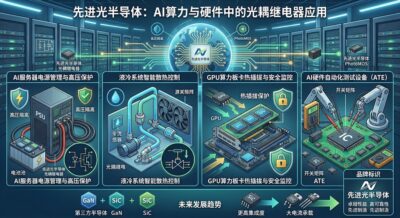
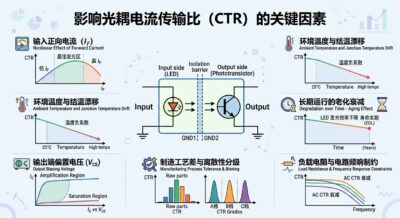
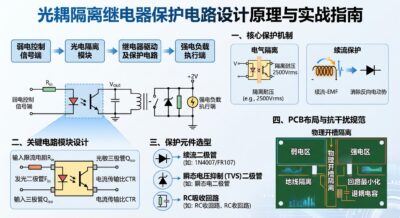
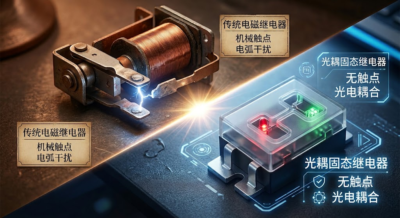
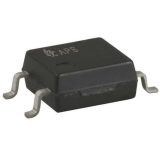
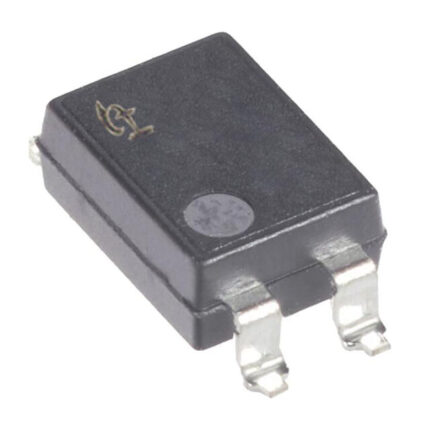
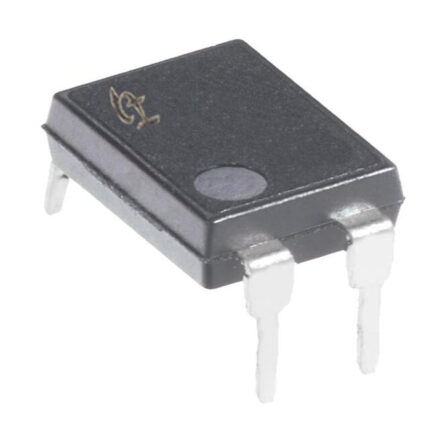
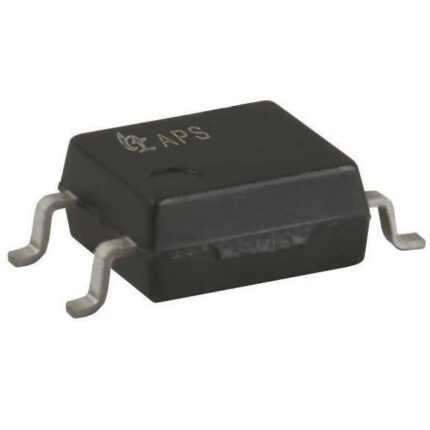
In the fields of modern electronic and electrical engineering, as well as industrial automation and control, signal isolation and circuit switch control are crucial elements for ensuring stable system operation. Due to the presence of mechanical contacts, traditional electromagnetic relays are prone to issues such as contact wear, arcing, response delay, and excessive size when operating under high-frequency conditions for extended periods. With the deep integration of semiconductor manufacturing technology and optoelectronic coupling technology, optocoupler relays, as a new type of contactless electronic switching device, have emerged and quickly occupied a central position in communication equipment, measuring instruments, medical electronics, automotive electronics, and industrial control systems.
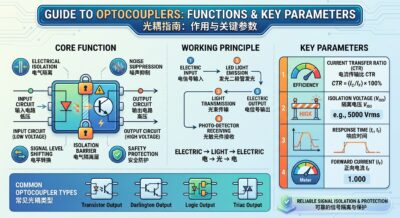
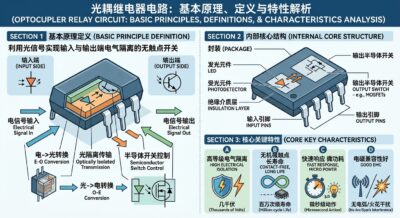
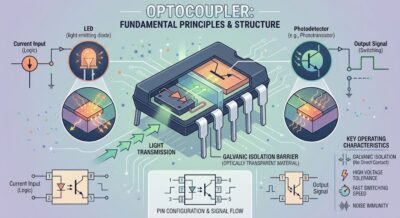
The working principle of an optocoupler relay is based on the photoelectric effect and semiconductor control technology. Its internal structure typically consists of three parts: the light-emitting element at the input end, the photoelectric conversion medium in the middle, and the power semiconductor switch at the output end. Upon receiving a control signal, the input end drives the light-emitting element to emit light of a specific wavelength. The optical signal passes through the isolation medium and illuminates the semiconductor element at the receiving end, where it is converted into an electrical signal, which in turn drives the semiconductor device at the output end to complete the conduction or cut-off of the circuit. This design, which utilizes light as a medium to transmit signals, achieves complete electrical isolation between the input control side and the output load side.
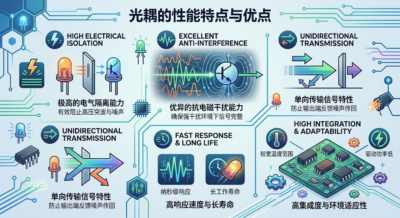
Optocoupler relays possess distinct technical characteristics. The primary feature lies in their excellent electrical isolation performance, where energy and data are transmitted between the input and output terminals entirely through optical signals, without any direct physical connection between the two ends. This allows them to withstand extremely high insulation voltage, effectively preventing electromagnetic interference and high-voltage backlash from the high-voltage side to the low-voltage control side. Secondly, they feature a mechanical contact-free structure, with no internal mechanical transmission or metal contact components, completely eliminating phenomena such as mechanical wear, contact oxidation, jitter sparking, and spark discharge, significantly enhancing the operational reliability of the device in harsh environments. Furthermore, optocoupler relays exhibit extremely high response speed and low power consumption characteristics. The current required to drive the light-emitting components at the input terminal is minimal, allowing direct driving by microcontroller output signals, and the turn-on and turn-off times are much faster than traditional electromagnetic switches. Additionally, they are compact and lightweight, mostly adopting standard semiconductor packaging formats such as surface mount and dual in-line package, greatly saving circuit board wiring space.
In terms of classification systems, optocoupler relays can be divided into multiple types based on different technical dimensions. According to the type of semiconductor device at the output terminal, they mainly include field-effect transistor (FET) type, thyristor type, and transistor type. Among them, the FET-based optocoupler relay can achieve bidirectional conduction control of AC and DC circuits, with extremely low on-resistance and ultra-small linear distortion; the thyristor type is commonly used for switch control of high-voltage AC loads; and the transistor type is mostly used for switching in DC small-signal circuits. According to the contact form and circuit operating state, they can be divided into normally open type, normally closed type, and normally open and normally closed combination type, which can flexibly meet various circuit logic design requirements. According to the packaging form, they cover specifications such as surface-mount and through-hole types, meeting various production process requirements such as automated surface-mount assembly lines and on-board insertion. According to the load characteristics, they can also be subdivided into high-voltage type, high-current type, low on-resistance type, and ultra-low parasitic capacitance type, used to address different application scenarios ranging from high-precision weak measurement signal processing to power-level load switching.
The technical advantages of optocoupler relays make them highly competitive in the family of electronic components. Their core strengths lie in their extremely long working life and high reliability. Free from the limitations of mechanical wear, their operation times are not constrained by mechanical fatigue, enabling them to achieve fault-free switching for hundreds of millions of times, significantly reducing the operation and maintenance costs and downtime risks of equipment. In terms of electromagnetic compatibility, the absence of arcing interference during contactless closure, coupled with a high-interference-resistant isolation barrier, effectively suppresses system common-mode noise and ground loop interference, ensuring the purity of high-precision signal acquisition and transmission. Additionally, their spark-free characteristic makes them highly suitable for use in special industrial sites with high explosion-proof requirements, such as flammable and explosive environments. Furthermore, optocoupler relays exhibit strong resistance to vibration and impact, with their solid-state semiconductor structure easily handling harsh vibration environments, ensuring stable operation in automotive electronics and industrial machinery and equipment.
Optocoupler relays have revolutionized traditional circuit control modes due to their multiple technical characteristics, including high isolation, contactless operation, long lifespan, fast response, and compact size. With the continuous advancement of semiconductor materials and packaging technology, optocoupler relays are evolving towards lower on-resistance, higher integration, and higher voltage resistance, and will continue to provide solid and reliable isolation control guarantees for modern intelligent electronic systems.
The above is the entire content of this article. If you find this article helpful, please continue to follow our website https://www.a-semi.com and the official account of “APSEMI“. We will bring you more news and knowledge!
Copyright Notice: Some article information is sourced from the internet and submissions from netizens. This website is solely responsible for organizing, typesetting, and editing the articles. It aims to disseminate more information and does not imply endorsement of the views expressed or verification of the authenticity of the content. If the articles and reprints on this site involve copyright issues, please contact us promptly, and we will address them as soon as possible.