











AHG-106A
Specifications: The AHG-106A is an SSOP-4 GaAs Hall element with specifications matching the AHG-116A: 14mA input, 38-58mV output, 450-750Ω input resistance, 1.0-2.0kΩ output resistance, and ±6mV offset. It is rated for the -40°C to 125°C temperature range.
Application Scenarios: This component serves as an alternative to the AHG-116A for the same range of applications. It is a versatile choice for embedded designers needing a robust, surface-mount magnetic sensor for motor commutation in small pumps and blowers, liquid level sensing with magnetic floats, and rotary encoder disks in commercial and industrial equipment.
AHG-116A
Specifications: The AHG-116A is a medium-sensitivity GaAs Hall element in an SSOP-4 package. It features a 14mA input, a 38-58mV Hall voltage, a low input resistance (450-750Ω), a variable output resistance (1.0-2.0kΩ), and a ±6mV offset. It is designed for operation from -40°C to 125°C.
Application Scenarios: This element offers a balanced performance profile for cost-effective SMD designs. It is commonly applied in white goods (e.g., washing machine drum position), power tool trigger/speed control, HVAC damper actuators, and general-purpose industrial proximity sensing where a reliable, temperature-stable analog output is needed without the extreme sensitivity of the "A" series variants.
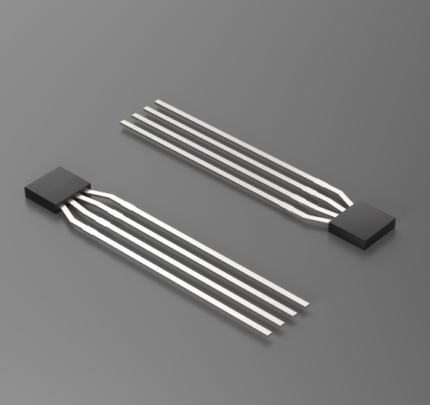
AHG-302A
Specifications: The AHG-302A is a compact SIP GaAs Hall element offering a balance of performance. It operates with a 14mA input, delivering a 38-58mV Hall voltage. It has a relatively low input resistance (450-750Ω) and a higher, variable output resistance (1.0-2.0kΩ). The offset voltage is tightly controlled at ±4mV. Its operational range spans -40°C to 125°C.
Application Scenarios: This element provides a good blend of sensitivity and impedance characteristics. Suitable for use in flow meters (for sensing turbine or paddle wheel rotation), gear tooth sensors (for speed and position in automotive transmissions), and as the sensing element in electronic compass modules or tilt sensors where consistent offset performance across temperature is important.