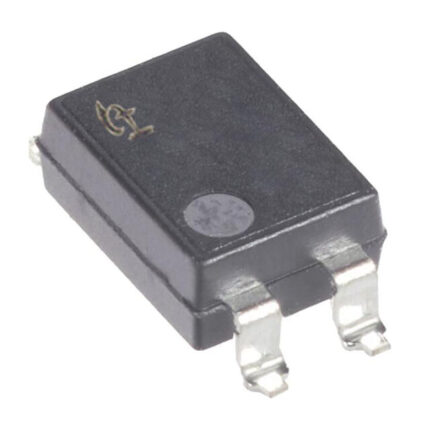
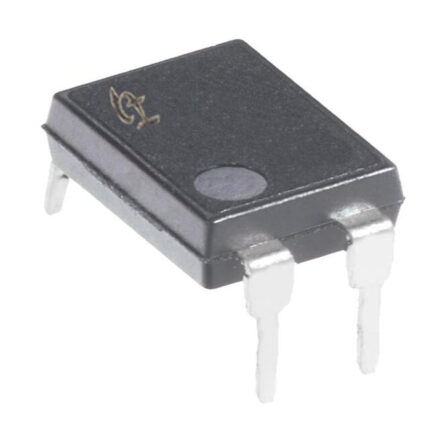
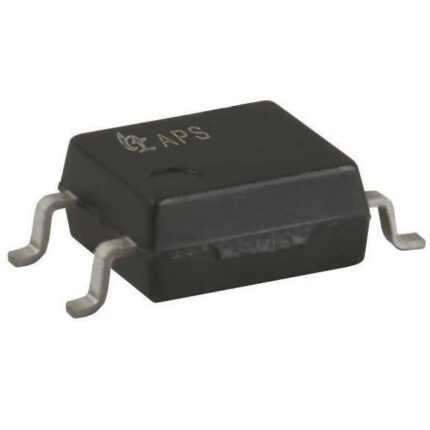
In the fields of modern electronic engineering, industrial automation, and power control, how to achieve safe isolation and precise control between high and low voltage signals has always been a key issue in circuit design. As a component that combines optoelectronic coupling technology with solid-state switching characteristics, the optocoupler relay has become a core element for achieving electrical isolation and signal conversion, thanks to its mechanical contact-free design, high isolation voltage, fast response, and excellent reliability. This article will provide an in-depth analysis of the optocoupler relay from the perspectives of basic principle definition, core structural composition, key working characteristics, and typical application value.
1. Basic Principles and Definitions
The optocoupler relay, also known as the optoelectronic coupling solid-state relay, is a contactless electronic switching device that utilizes optical signals as the transmission medium to achieve electrical isolation between the input and output terminals.
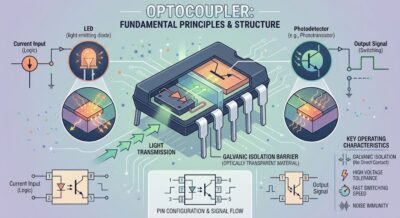
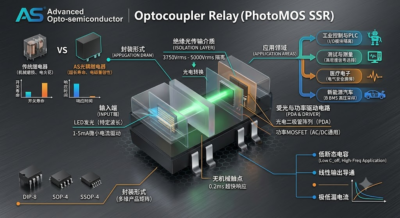
From a physical definition perspective, an optocoupler relay structurally encapsulates both the light-emitting and light-receiving components within the same opaque enclosed cavity. Its basic working principle can be summarized as an “electricity-light-electricity” energy and signal conversion process:
When a forward control current is applied to the input terminal, the internal light-emitting element emits photons of a specific wavelength; the light-receiving element inside the cavity receives the light and generates photogenerated carriers, which in turn triggers the semiconductor switch at the output terminal to turn on; when the control current at the input terminal is cut off, the light-emitting element stops emitting light, the light-receiving element loses the light, and the semiconductor switch at the output terminal returns to the off state accordingly.
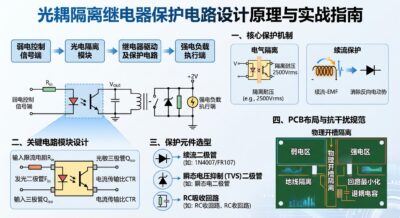
Since there is no direct electrical connection between the input side and the output side, and energy and signals are transmitted solely through photons, the optocoupler relay can perfectly achieve electrical isolation between high and low voltage circuits, effectively blocking the impact of high voltage surges, common mode interference, and ground loops on the low voltage control system.
II. Internal Core Structure Composition
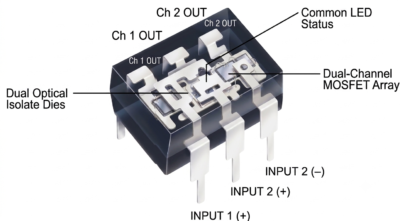
A complete optocoupler relay circuit primarily consists of three core components: the input light-emitting side, the intermediate optical isolation medium, and the output light-receiving switch side.
The input side typically employs a light-emitting diode (LED). When a control signal is injected, the LED converts electrical energy into an infrared light signal. The response speed of the LED is extremely fast, enabling it to establish the light signal within a very short time.
The intermediate isolation medium is composed of transparent resin or optical dielectric adhesive with high insulation strength. This medium not only needs to maintain extremely high light transmittance to reduce light loss, but also must possess extremely high breakdown voltage capability to ensure that the input and output terminals can withstand voltage levels of thousands of volts or more.
The structure of the output side varies depending on the specific application scenario. Common light-receiving components include phototransistors, phototriacs, and combinations of photodiode arrays paired with field-effect transistors (FETs). In power-type optocoupler relays, the photodiode array absorbs light energy to generate a photovoltaic voltage, which in turn drives a pair of inverting series-connected FETs, enabling the output terminal to switch between DC and AC loads.
III. Analysis of core job characteristics
The reason why optocoupler relays can replace traditional electromagnetic relays in numerous control scenarios is primarily attributed to their unique electrical and physical characteristics:
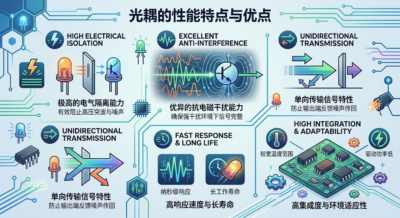
Firstly, it boasts excellent electrical isolation and anti-interference properties.
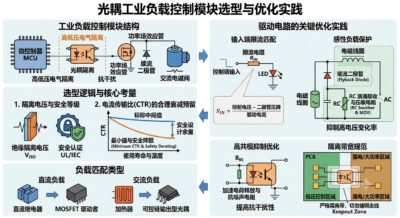
The optocoupler relay boasts an extremely high insulation resistance between its input and output, coupled with minimal parasitic capacitance. Its voltage withstand level can generally reach several thousand volts or higher. This high-level isolation capability effectively isolates high-voltage noise and electromagnetic interference at the output end, preventing them from being fed back to the microcontroller or logic chip at the input end. This significantly enhances the stability and safety of the entire control system.
Secondly, it boasts a long lifespan and high reliability without mechanical contacts.
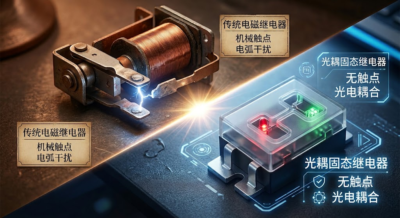
Traditional electromagnetic relays rely on the closing and opening of mechanical contacts, which are prone to arcing, contact oxidation, and mechanical wear during frequent switching or load-bearing disconnection, resulting in limited service life and potential contact adhesion failure. Optocoupler relays operate entirely based on the physical characteristics of semiconductor devices, with no moving parts inside, thus exhibiting extremely high mechanical vibration resistance, no wear, and no arcing. Their operational lifespan is improved by several orders of magnitude compared to traditional relays.
Third, it boasts extremely fast response speed and low power consumption characteristics.
Benefiting from the inherent advantages of photoelectric conversion and semiconductor switches, the actuation and release times of optocoupler relays are typically in the microsecond to millisecond range, significantly faster than the millisecond response of electromagnetic relays. This makes them easily capable of meeting the requirements of high-frequency switching and high-speed data signal transmission. At the same time, driving a light-emitting diode (LED) requires only a very small current in the microampere to milliampere range, greatly reducing the power consumption at the control end.
Fourth, silent operation and good electromagnetic compatibility.
Due to the absence of physical impact from mechanical engagement and disengagement, optocoupler relays are completely silent during the switching process. Furthermore, the absence of electrical sparks generated by contacts significantly reduces radio frequency interference and electromagnetic radiation, making them particularly suitable for use in noise-sensitive medical equipment, precision measuring instruments, and flammable and explosive special industrial environments.
IV. Application Value and Summary
In summary, optocoupler relays, with their design concept of “using light as a bridge, no contacts, and high isolation,” have successfully addressed core challenges in modern electronic systems, such as high and low voltage interface matching, signal isolation protection, and high-frequency reliable switching. With the continuous advancement of semiconductor manufacturing technology, optocoupler relays are evolving towards smaller size, lower power consumption, higher voltage resistance, and higher integration.
Whether in industrial automation controllers, new energy battery management systems, communication equipment, or smart homes and medical instruments, optocoupler relays play an indispensable role as safety guardians and precise control hubs, laying a solid hardware foundation for building efficient, stable, and secure modern electronic systems.
The above is the entire content of this article. If you find this article helpful, please continue to follow our website https://www.a-semi.com and the official account of “APSEMI“. We will bring you more news and knowledge!
Copyright Notice: Some article information is sourced from the internet and submissions from netizens. This website is solely responsible for organizing, typesetting, and editing the articles. It aims to disseminate more information and does not imply endorsement of the views expressed or verification of the authenticity of the content. If the articles and reprints on this site involve copyright issues, please contact us promptly, and we will address them as soon as possible.